
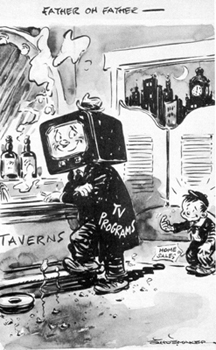
When television arrived in Detroit on March 4, 1947, the first few weeks
of programming were limited to live sporting events, cooking shows, man on the
street interviews and filmed segments. With the bulk of receivers in the city
residing in hotel and theater lobbies, bars and other public places, TV
manufacturers needed to convince consumers that TV belonged in the home. Philco,
RCA and General Electric decided the best way to do that was to sponsor an
afternoon block of family friendly children�s programs.
Junior Jamboree, sponsored by RCA and Ned�s Auto Supply,
was Detroit�s first TV kid�s show. WWJ�s Women�s Editor Fran Harris made
the leap from radio to television to become the show�s producer and host.
Harris� only directive from the sponsor was �We want a children�s show
that�s as good as Kukla, Fran and Ollie,� and �Put in anything else
you think might fit.�
 Junior Jamboree aired weekdays from 4:45 to 5:15. A
typical episode featured puppets, magic by Karrell Fox, contests and games,
interviews with local athletes and celebrities, birthday greetings and stories
illustrated by a live artist. Toby
David, a decade before he became Captain Jolly, supplied the voices for the
puppets used in the RCA commercials.
Junior Jamboree aired weekdays from 4:45 to 5:15. A
typical episode featured puppets, magic by Karrell Fox, contests and games,
interviews with local athletes and celebrities, birthday greetings and stories
illustrated by a live artist. Toby
David, a decade before he became Captain Jolly, supplied the voices for the
puppets used in the RCA commercials.
A 1948 review
praised Harris� work on the show. �Her personality and presentation are
tailored right to win the small fry.�
Playtime aired from 5:15 to 5:30. Ruth Noyes and the
Detroit Civic Players travelled daily down Fable Lane to present live versions
of classic fairy tales. The show was self sustaining, meaning that it had no
sponsor, a common practice in the early days of television.
Philco�s Fun And Fables filled the 5:30 to 6:00
timeslot. The format was simple. Host Jane Durelle read stories while a camera
focused on the illustrations. Born in Toledo, Ohio, Durelle was a former
schoolteacher who studied radio and speech at Wayne University. The videogenic
Durelle not only narrated the stories, she also chose the material, wrote the
script and worked out the presentation of the drawings. Cartoonist Phil Wagner
handled the commercials by working Philco and the initials of a home viewer into
an amusing drawing, which was then mailed to the viewer.
At 6:00, General Electric sponsored a half hour of educational films. The
station then signed off for the afternoon, returning to the air at the seven
o�clock hour for their evening programming.

